
Newsletter Subscribe
Enter your email address below and subscribe to our newsletter

Enter your email address below and subscribe to our newsletter
Think Big - Act Bold

Most successful team management hinges on establishing effective habits that drive consistency and productivity within the group. Implementing the principles of Atomic Habits can lead to significant improvements in team dynamics and overall performance. According to a resource on Build Effective Remote Teams With Atomic Habits, understanding how small changes can make a big impact is key to fostering a positive work environment and achieving shared goals.
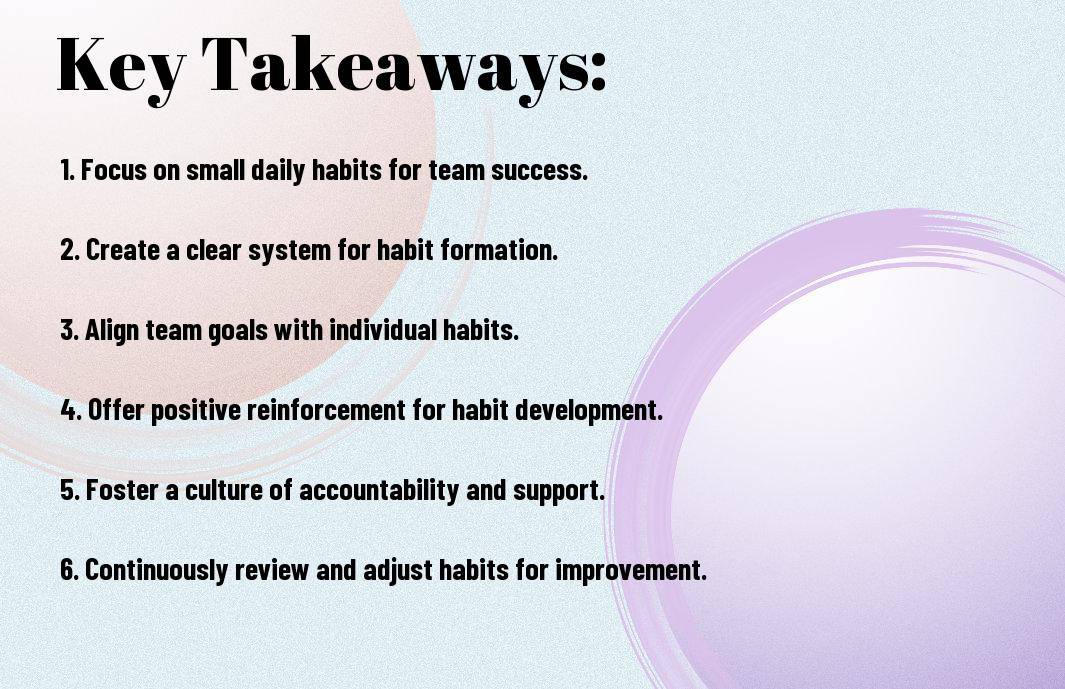
Little changes can make a big impact on team performance. If you’re seeking ways to boost your team’s productivity, How to improve Team Productivity with Atomic Habits is a great resource to get started. By implementing Atomic Habits principles in team management, you can create a positive and efficient work environment that drives success.
For successful team management, it’s vital to understand the fundamentals of Atomic Habits. These habits focus on making small changes consistently over time that lead to significant improvements in team productivity and overall performance. By establishing a clear routine and setting achievable goals, your team can develop positive habits that drive success.
Small changes have a significant impact on team management because they are sustainable and manageable for team members. By focusing on making small improvements daily, team productivity can gradually increase without overwhelming the team. These changes create a ripple effect, leading to improved collaboration, communication, and overall performance.
Atomic Habits emphasize the power of small changes over time. By consistently implementing tiny habits within your team, you can see remarkable improvements in productivity and efficiency. It’s the cumulative effect of these small changes that creates a significant positive impact on your team’s overall performance.
Despite the challenges the work environment may present, implementing Atomic Habits within your team can greatly improve efficiency and performance. By focusing on small changes and building strong habits, you can transform your team into a well-oiled machine that consistently achieves success.
To kickstart your journey towards implementing Atomic Habits with your team, it’s crucial to set clear goals and expectations. Clearly defined objectives provide a roadmap for everyone to follow, ensuring that each team member understands their role and how it contributes to the overall team success. By establishing specific, measurable, and achievable goals, you create a foundation for building effective habits and fostering a culture of accountability within your team.
Behaviors play a pivotal role in shaping the culture and dynamics of your team. Identifying the desired behaviors that align with your team’s goals and values is imperative for creating a positive and productive work environment. Whether it’s promoting teamwork, effective communication, or innovative thinking, pinpointing the behaviors that will drive your team towards success is key to implementing Atomic Habits effectively.
Understanding the impact desired team behaviors can have on your team’s performance is crucial. By recognizing and reinforcing these behaviors, you create a foundation for positive habits to form, ultimately leading to improved teamwork, productivity, and overall success.

Environment plays a crucial role in shaping behavior and habits within a team. By creating an environment that makes desired actions 3 Atomic Habits for Program Managers, you can set your team up for success. Make sure that goals, expectations, and processes are clearly communicated and visible to all team members. This clarity eliminates confusion and ensures that everyone is on the same page, moving in the right direction.
Atomic habits are more likely to stick when they are attractive and enjoyable. Building positive team dynamics can make work more engaging and satisfying for everyone involved. Encouraging open communication, collaboration, and appreciation among team members can foster a sense of belonging and motivation. By creating a supportive and enjoyable work environment, you can enhance team cohesion and productivity.
Encouraging a positive team culture where team members feel valued and respected can lead to increased morale and a greater sense of purpose. Recognizing and celebrating team achievements and milestones can further reinforce positive behaviors and foster a culture of continuous improvement.
Positive habits are easier to maintain when processes are streamlined and obstacles are removed. Simplify workflows and procedures to make tasks more straightforward and efficient for your team. Identify and eliminate any unnecessary steps or bottlenecks that may hinder progress. By reducing friction and complexity, you can make it easier for your team to focus on their work and achieve their goals.
Easy access to tools and resources can also simplify tasks and improve team efficiency. By providing the necessary support and infrastructure, you can empower your team to perform at their best and navigate challenges more effectively.
Reward systems and feedback loops are powerful tools in reinforcing positive behaviors and sustaining motivation within a team. Recognize and reward individual and team accomplishments to acknowledge hard work and encourage continuous improvement. Constructive feedback and regular performance evaluations can help team members track their progress and identify areas for growth.
Make sure that the rewards are meaningful and aligned with the team’s goals and values. By creating a culture of appreciation and feedback, you can foster a sense of achievement and accountability that motivates your team to consistently strive for excellence.
Not just a buzzword, continuous improvement is the backbone of successful team management. By fostering an environment that embraces change and growth, teams can stay ahead in today’s competitive landscape.
Improvement is all about embracing mistakes as valuable learning opportunities. When team members feel safe to make and learn from mistakes, they are more likely to innovate and push boundaries. Encouraging a culture where mistakes are viewed as stepping stones to success fosters creativity and a growth mindset within the team.
Embracing autonomy and growth among team members is crucial for promoting individual and team development. When team members are empowered to make decisions and take ownership of their work, they are more invested in the team’s success. Providing opportunities for growth, such as training programs or mentorship, can further enhance individual skills and contribute to overall team performance.
By fostering a culture that values autonomy and continuous growth, teams can unlock the full potential of their members and achieve greater success together.
All change comes with a certain level of resistance, and when implementing atomic habits within a team, this can be particularly evident. Some team members might be comfortable with the current way of doing things and may resist changing their habits. It’s necessary to address this resistance head-on and establish open communication channels to help team members understand the value and benefits of adopting new habits.
Consistency is key when it comes to implementing atomic habits within a team. However, maintaining consistency can be challenging, especially when team members face setbacks or distractions. It’s crucial to keep motivation levels high by celebrating even small wins and progress. By acknowledging achievements, team members are more likely to stay motivated and continue working towards establishing productive habits.
Maintaining a positive and encouraging environment within the team can help boost motivation and consistency. Encouraging team members to support each other and hold each other accountable can go a long way in ensuring that everyone stays on track and works towards their common goals.
Unlike setting and forgetting goals, successful team management requires continual monitoring of progress and the flexibility to adjust strategies as needed. Implementing Atomic Habits in team management involves measuring success and making necessary changes along the way.
With habits tracking, teams can monitor their progress towards established goals by tracking specific habits that lead to successful outcomes. Tracking habits allows team leaders to identify patterns, areas of improvement, and potential roadblocks that may hinder progress. By consistently monitoring habits, teams can identify which behaviors are contributing to success and which habits may need to be adjusted.
Monitoring team feedback is crucial for iterative improvement within a team. By regularly gathering feedback from team members, leaders can gain valuable insights into what is working well and what areas need improvement. It is important to create a culture where feedback is encouraged and acted upon, fostering continuous growth and development within the team.
Monitoring team feedback helps leaders identify potential areas of conflict or dissatisfaction before they escalate. Additionally, it allows for positive reinforcement of behaviors that contribute to team success, creating a more cohesive and high-performing team.
Now that you have learned how to implement Atomic Habits for successful team management, you are equipped with powerful strategies to foster a positive work culture, enhance productivity, and achieve team goals. By focusing on small but consistent changes, encouraging feedback and accountability, and creating a supportive environment, you can lead your team towards success.
Remember that building effective habits takes time and effort, so be patient with yourself and your team as you work towards implementing these habits. By staying committed to the process and continuously refining your approach, you will see gradual improvements in teamwork, communication, and overall team performance. Embrace the power of Atomic Habits and watch as your team flourishes and reaches new heights together.
A: Implementing Atomic Habits for successful team management involves breaking down tasks into small, actionable steps, creating a routine, and setting clear goals for the team.
A: Establishing habits for team management fosters consistency, improves team productivity, and creates a positive work culture.
A: Key habits for successful team management include effective communication, active listening, setting priorities, giving feedback, and fostering a growth mindset.
A: Leaders can motivate their teams to adopt new habits by leading by example, providing support and resources, recognizing progress, and celebrating achievements.
A: Accountability is crucial in implementing Atomic Habits for team management as it helps team members stay committed to their goals, track progress, and take ownership of their actions.
A: Setbacks can be managed by viewing them as learning opportunities, adjusting strategies as needed, seeking feedback from team members, and staying resilient in the face of challenges.
A: Some long-term benefits include improved team performance, increased employee engagement and satisfaction, stronger team relationships, and a culture of continuous improvement within the team.